


Caravan Interior Transformation Examples That Work
A dark, tired caravan can make even a beautiful holiday spot feel less inviting. The best caravan interior transformation examples do more than replace old vinyl or add a fresh coat of paint. They solve the daily frustrations that make a van hard to use: poor storage, cramped seating, worn cabinetry, inadequate lighting and finishes that have seen too many summers.
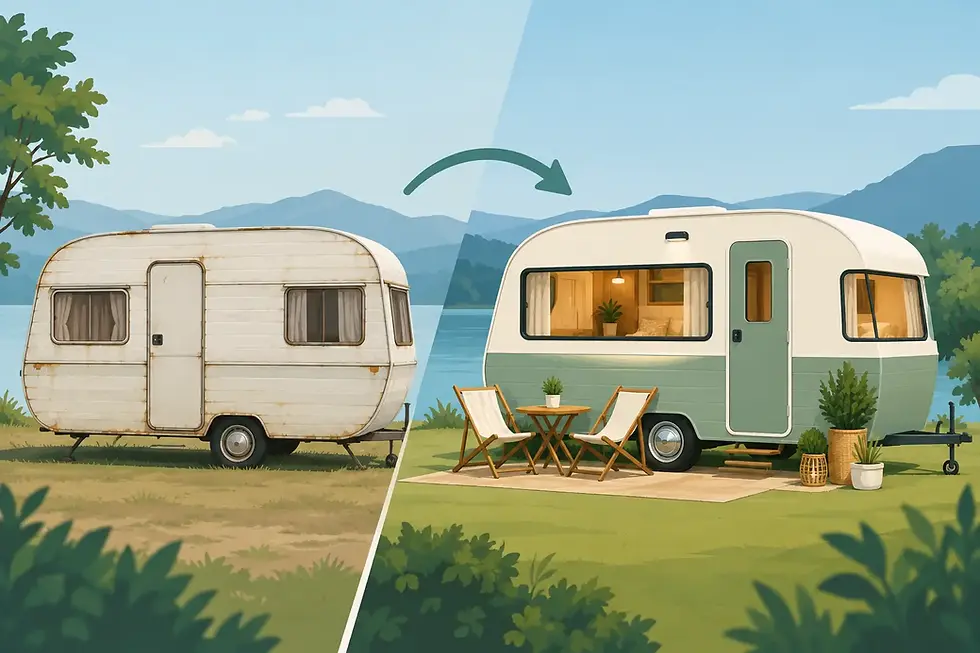
For a vintage van, an onsite retreat or a working commercial conversion, the right interior starts with how it will actually be used. That is where a thoughtful renovation becomes more than a cosmetic update. It turns a much-loved old caravan into your little Palace.
Caravan interior transformation examples worth borrowing
1. The dark timber van made light without losing its character
Many classic caravans arrived with deep timber panelling, small windows and heavy patterned upholstery. That original look can be charming, but too much dark material can make a compact interior feel closed in.
A successful transformation often keeps selected timber features rather than covering everything in white. Retaining a beautifully grained cupboard door, timber trim or a restored dinette table preserves the caravan's period personality. Lighter wall finishes, cream or warm-white cabinetry, fresh curtains and pale flooring then lift the overall space.
This approach works particularly well for retro and vintage caravans because it respects what makes the van special. The trade-off is that matching new finishes to older timber takes care. A bright white with a cool blue undertone can make warm timber look orange, while a softer white, sage, sand or muted pastel usually sits more comfortably alongside it.
2. The onsite caravan converted into a proper weekend retreat
An onsite caravan does not always need to remain a basic sleeping spot. When it stays in one location for long periods, owners often want it to feel closer to a compact holiday cabin - somewhere comfortable for long weekends, school holidays or visiting family.
In this type of refit, the dinette may be rebuilt with deeper seat cushions and hard-wearing upholstery. Tired overhead cupboards can be refinished or replaced with cleaner, more useful storage. New flooring creates one continuous visual base, while updated curtains or blinds provide privacy without blocking natural light.
The strongest onsite transformations usually include a practical conversation about moisture as well as styling. If a van has been exposed to coastal air, rain or years of condensation, any water damage, soft framing or failed sealing needs attention before decorative work begins. New cabinetry fitted over damp or compromised structure only hides the problem temporarily.
3. A compact kitchen that earns its place
Caravan kitchens are often where an ageing layout shows its limitations first. Benchtops can be too low or badly positioned, drawers may stick, and older appliances can take up valuable space without meeting the owner's needs.
A kitchen transformation does not necessarily mean installing a full domestic kitchen in miniature. In a small footprint, fewer well-planned components often work better. A durable benchtop, useful drawer storage, a correctly sized fridge, sensible splashback and good task lighting can make cooking much easier without overloading the interior.
Consider how you travel before finalising the plan. A couple touring regularly may prefer extra bench space and pantry storage. A family may get more value from a larger fridge and a dinette that converts easily for children. For a permanently parked van, the kitchen can be more residential in feel, provided weight, power supply and ventilation requirements are properly considered.
4. A sleeping area designed around real storage
Under-bed storage is one of the most valuable areas in a caravan, yet it is often awkward to access. A common interior transformation replaces a fixed bed base with a lift-up platform, side-access hatches or purpose-built drawers.
The best option depends on where the caravan is used. Drawers are convenient when there is clear access outside or beside the bed. A lift-up base can provide more enclosed storage and is often better for bedding, folding chairs or less frequently used gear. It needs quality hinges, gas struts where appropriate, and secure latches for travel.
This is also a good time to review mattresses, reading lights and charging points. Small changes can make a major difference at the end of a long drive, especially in older vans where the bedroom was never designed for modern devices or the storage needs of two adults.
5. A dinette renewed for meals, work and extra beds
The dinette has to work harder than nearly any other space in a caravan. It is the breakfast table, rainy-day lounge, card table, laptop desk and, in many layouts, an extra bed.
A practical dinette renovation may involve new foam, quality upholstery, repaired or rebuilt seat boxes, a sturdier table and updated lighting. Neutral upholstery paired with a richer accent colour can look fresh while being more forgiving than an all-white interior. For family vans, washable fabrics and easy-clean surfaces are worth prioritising over delicate finishes.
Comfort should not be judged by appearance alone. Seat depth, back support and table height matter. A beautifully upholstered dinette that is uncomfortable after twenty minutes will not improve the way you use the caravan.
Make the lighting do more of the work
Lighting is one of the clearest before-and-after changes in caravan interior transformation examples. Older fittings can cast a yellow, uneven light and create shadows in exactly the places you need to see clearly.
A layered lighting plan feels more considered than simply fitting the brightest ceiling lights available. General lighting makes the interior usable, task lighting helps at the kitchen and reading areas, and small accent lights can bring warmth to a sleeping nook or display shelf. LED fittings are a sensible choice for most renovations because they reduce power draw and heat output.
For vans that travel off-grid, lighting should be planned alongside the 12V system, battery capacity and solar setup. For onsite caravans with 240V appliances, electrical work must be assessed and completed appropriately. It is not an area for improvised wiring behind fresh wall panels.
When a caravan becomes a business asset
Some of the most memorable transformations are commercial conversions. A vintage caravan can become a mobile bar, coffee service point, event welcome station or branded hospitality space. The visual impact matters, but commercial work also has to withstand frequent use, transport and changing event conditions.
In these projects, the layout begins with workflow. Where will staff stand? How will stock be stored? Is there enough bench space for service? What equipment needs power, ventilation or water access? A beautiful exterior and polished interior are valuable, but neither should get in the way of safe, efficient operation.
Brand colours, signage zones and feature finishes can then be built into the design rather than added as an afterthought. This creates a stronger result and avoids the look of a standard caravan with a logo stuck on the side.
Start with the condition, not the mood board
Paint colours, flooring samples and upholstery are exciting, but the most successful renovation projects begin with a close inspection. Water ingress, hail damage, accident damage, soft floors, ageing seals and failed electrical components can affect both the budget and the design options.
This is particularly true with vintage caravans. What looks like a straightforward interior refresh may reveal damage behind a wall lining or beneath a cupboard. Addressing structural repairs and resealing first protects the new work and gives you a more accurate picture of the project scope.
At Palace Caravans, renovation planning brings repair capability and custom design into the same conversation. That means an interior can be shaped around the caravan's actual condition, your intended use and a budget that makes sense, rather than a one-size-fits-all package.
Choosing finishes that still look good after the road trip
Caravan interiors move, flex and experience heat, dust, wet towels and plenty of traffic. Materials need to suit that reality. Residential products can sometimes be used, but they should be chosen carefully and installed with the movement of the van in mind.
Durable flooring, quality upholstery, secure latches and cabinetry built to handle vibration will generally serve you better than a quick cosmetic fix. Light colours can make a small interior feel larger, although a mid-tone floor or textured fabric may be more forgiving for beach trips, kids and pets.
A strong renovation should feel personal, not like every other van in the park. Bring a few clear reference images, identify the elements you genuinely love, and be honest about how you travel. The right transformation is the one that still feels practical and welcoming after the novelty of the new paint has worn off.


Comments