


How to Modernise Caravan Interiors That Still Work
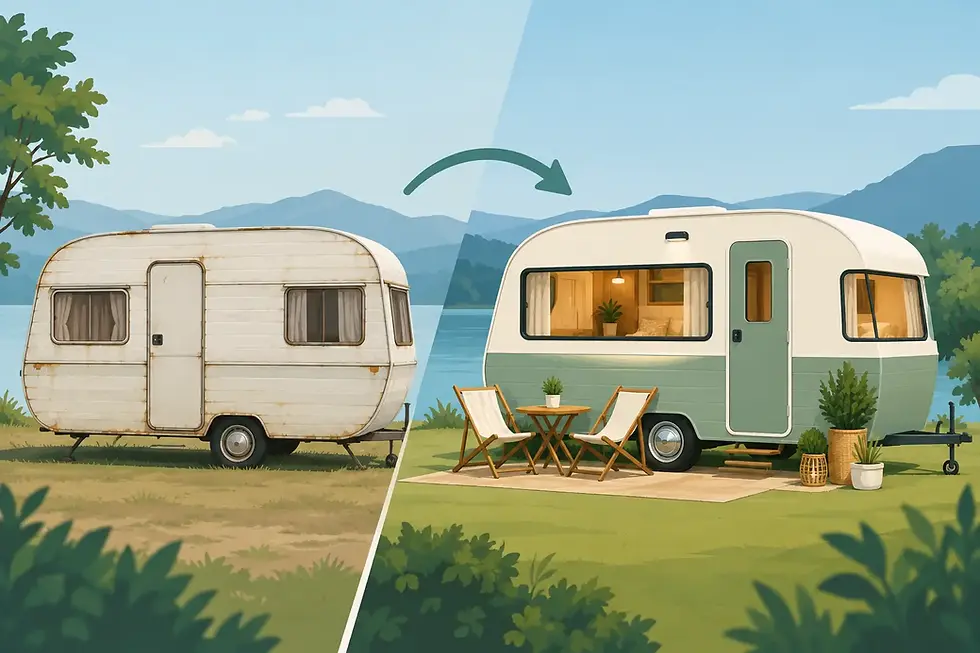
A caravan can be mechanically sound yet still feel stuck in another decade: dark timber, tired cushions, yellowed walls and storage that never seems to suit the way you travel. Learning how to modernise caravan interiors is not about copying a showroom look. It is about making your little Palace lighter, easier to use and genuinely comfortable, without covering up problems that need proper repair.
The best renovations begin with an honest look at the van. A vintage caravan may need careful restoration to retain its character, while an onsite van may benefit from a complete rethink of the layout, finishes and appliances. Either way, the strongest result comes from putting safety, structure and everyday function ahead of cosmetic shortcuts.
How to modernise caravan interiors in the right order
It is tempting to start with paint colours, new flooring or a beautiful splashback. First, check for water damage, soft walls, mould, failed sealant, damaged subflooring and signs of electrical issues. New cabinetry and finishes will not last if moisture is still entering around windows, roof joins or exterior fittings.
Water damage is particularly common in older vans and can travel much further than the visible stain. A musty smell, bubbling wall lining, spongy flooring or discoloured corners deserve investigation before any interior refit begins. Repairing the structure, resealing the exterior and replacing affected framing or linings protects the money you put into the visible parts of the renovation.
The same goes for electrical work. Modern interiors often include extra charging points, LED lighting, a larger fridge, air-conditioning, television and solar capability. These upgrades need to be designed around the caravan's existing 12V and 240V systems, battery capacity and intended use. Electrical alterations should be completed properly, not patched together behind a freshly painted wall.
Start with the way you use the caravan
A good design brief is more useful than a folder full of inspiration photos. Think about where the caravan spends most of its time and who uses it. A touring van needs secure storage, durable finishes and sensible weight distribution. A permanent onsite caravan can be more decorative and may need better seating, sleeping space and a kitchenette for longer stays.
For a family, the priority may be practical bunks, wipe-clean upholstery and somewhere to put wet towels. For a couple travelling regularly, a larger pantry, upgraded bed base and improved reading lights may matter more. A mobile bar or event caravan has a different set of needs again: customer-facing finishes, efficient serving space, commercial equipment and a layout that works for staff during a busy service.
Avoid adding features simply because they are popular. A breakfast bar that blocks the walkway, open shelving that rattles on the road or a heavy domestic appliance that affects towing can make the caravan less enjoyable. The right choices are the ones that suit your actual trips, not just the before-and-after photo.
Bring in light before choosing colour
Many older caravan interiors feel smaller than they are because of poor lighting and heavy finishes. Replacing old fittings with warm LED lighting is one of the most effective upgrades. LEDs use less power, create less heat and can be positioned to make each part of the van work better.
Use a combination rather than relying on one central ceiling light. General ceiling lighting keeps the space bright, while reading lights at the bed, task lighting over the kitchen bench and subtle lighting around seating create a more useful atmosphere at night. In a compact caravan, well-placed light also reduces the need for very pale, high-maintenance finishes.
When selecting colours, consider the amount of natural light, window size and existing cabinetry. Soft whites, warm greys, muted greens and sandy neutrals can brighten an interior without making it feel clinical. Vintage vans often suit a carefully chosen retro accent colour, such as sage, dusty blue, mustard or terracotta, especially when balanced with simple wall linings and timber details.
Painting cabinetry can deliver a major change for a reasonable budget, provided the surfaces are prepared correctly and the finish is suited to caravan movement and daily use. Painting over swollen particleboard or loose laminate, however, is usually false economy. Sometimes replacement doors, new bench tops or a tailored cabinetry refit is the better long-term answer.
Make the layout feel bigger, not busier
Caravan interiors reward restraint. Every cupboard, table edge and appliance needs to earn its place. Before removing permanent furniture, measure the clear walkway, door swings, bed access and storage volume. Small changes, such as reshaping a dinette table, installing a more compact fridge or changing overhead cupboard doors, can improve circulation without requiring a full structural alteration.
Modernising does not always mean removing all the old joinery. Well-built vintage cabinetry can be refreshed with new handles, paint, bench tops and better internal organisation while retaining the character that makes the caravan special. If the original layout works, improving its finishes and function may preserve more value than starting again.
Where a full refit is needed, plan storage at the same time as the new layout. Deep drawers, divided cupboards and purpose-made spaces for cookware, bedding and outdoor gear are more useful than a collection of shallow decorative shelves. Latches and hardware must also be suitable for travel. What looks neat when parked should still stay shut on a rough road.
Choose materials made for caravan life
A caravan moves, flexes, heats up, cools down and gets exposed to sand, rain, children, pets and camping gear. Materials need to look good, but they also need to cope. Lightweight is a priority, particularly in touring caravans where every upgrade affects payload and towing behaviour.
Vinyl plank flooring is popular because it is easy to clean, comfortable underfoot and available in timber-look styles that soften a compact space. It needs a sound, dry subfloor beneath it. For upholstery, marine-grade or hard-wearing fabrics can be a wise choice in high-use vans, while removable cushion covers make cleaning easier.
Bench tops, splashbacks and wall linings should be selected with heat, cleaning and weight in mind. A heavy stone-look product may look impressive, but a lighter alternative can be more appropriate for a caravan. Good workmanship at joins, corners and edges matters just as much as the material itself, particularly where vibration can expose weak installation.
Update the kitchen and bathroom thoughtfully
A dated kitchenette can make an entire caravan feel old, even after new paint and flooring. Replacing worn tapware, a damaged sink, tired cooktop or old fridge can improve both the look and the day-to-day experience. If you mostly stay in powered parks, your appliance priorities may differ from someone who spends long periods off-grid.
Consider bench space before choosing a larger appliance. A practical kitchen needs somewhere to prepare meals and enough storage for the items you use regularly. A folding bench extension can be more useful than trying to force a full-size household-style solution into a small van.
Bathroom upgrades deserve the same care. Water-resistant wall linings, reliable sealing, effective ventilation and sensible storage should come before decorative touches. A fresh vanity, modern mirror and better lighting can transform a compact ensuite, but they should never hide an unresolved leak or damaged wall framing.
Do not overlook comfort systems
The difference between a caravan that looks modern and one that feels modern is often comfort. Window coverings can improve privacy and reduce heat, while insect screens, roof ventilation and air-conditioning make longer stays more pleasant. New cushions, a supportive mattress and improved seating can have more impact on weekends away than a costly feature wall.
For off-grid travel, assess solar, batteries and charging needs as one system. Adding a panel alone may not solve power limitations if the battery bank, wiring or charging equipment is undersized. A tailored setup helps you run the essentials confidently without overloading the caravan or making costly changes twice.
Set a realistic renovation budget
The most satisfying caravan renovations are staged around priorities. Deal with water ingress, structural repairs and electrical safety first. Then decide which visible upgrades will have the greatest effect, such as lighting, flooring, paint, upholstery or a kitchen refresh. This approach gives you room to make informed decisions rather than spending the budget early on finishes that may need to come back out.
Keep a small allowance for surprises, especially with older and vintage caravans. Once wall linings or flooring are removed, hidden deterioration can become visible. Clear communication, photos during the work and practical advice about options make these decisions easier when they arise.
At Palace Caravans, the goal of an interior renovation is never to make every van look the same. It is to create a well-built space that reflects the owner, works for the journey ahead and respects the character worth keeping. Start with what needs attention, choose upgrades that suit how you live, and your caravan can feel like a place you look forward to returning to after every day on the road.


Comments