


Caravan Insurance Versus Private Repairs
A dented rear panel, a hail-marked roof or a soft patch beside a window can quickly turn a planned getaway into a difficult decision. With caravan insurance versus private repairs, the right path is rarely just about the first dollar figure. It is about the cause of the damage, your policy, the caravan’s condition, the standard of finish you want and whether this is the moment to make your little Palace better than it was before.
For caravan owners across the Central Coast, Newcastle, Sydney and wider NSW, a good repair starts with clear information. Insurance can take the pressure off an unexpected accident. Private work can give you more freedom to choose the scope, materials and timing. In some cases, a combination of both is the most sensible approach.
Caravan insurance versus private repairs: the real difference
Insurance repairs are generally for sudden, insured events. That may include collision damage, storm damage, hail, vandalism or water ingress caused by a covered incident. Your insurer will assess the claim against your policy, then approve repairs within the accepted scope of damage. You will usually pay an excess, subject to the policy terms, and the insurer may appoint or approve the repairer.
Private repairs are paid for directly by the owner. They are commonly chosen for wear and tear, maintenance issues, upgrades, cosmetic improvements or damage that is below the policy excess. A private job can also suit owners who would rather avoid a claim affecting their claims history, although the financial impact of claiming varies between policies and insurers.
Neither option is automatically better. The question is whether the damage is covered, whether the repair outcome is properly specified, and whether you are comparing like with like. A low private quote that only addresses visible damage is not a fair comparison with an insurance repair that includes structural investigation, resealing and reinstatement work.
When an insurance claim makes sense
A claim is often worth considering after a significant accident, hailstorm or weather event. Caravan bodywork can conceal more damage than it first appears. A scrape along an aluminium cladding panel may have affected the frame, insulation, internal lining or seals. A roof impact can compromise waterproofing around vents, air-conditioning units and joins.
Water damage needs particularly careful assessment. The visible stain is often the smallest part of the problem. Moisture may have travelled through wall cavities, softened timber framing, affected flooring or damaged cabinetry. Repairing only the stained section can leave the source of the leak and the hidden deterioration unresolved.
Before authorising work, read the relevant parts of your policy or speak with your insurer. Ask what evidence they need, whether you can nominate a specialist repairer, what excess applies and whether towing, storage or temporary accommodation is included. Photographs taken as soon as it is safe to do so can be useful, especially after storm or hail damage.
It is also worth asking how pre-existing damage will be treated. Insurance is designed to return the caravan to its condition immediately before the covered event, not to fund unrelated maintenance or a complete renovation. If worn seals, old repairs or long-term deterioration are discovered during the job, they may sit outside the approved claim scope.
When private repairs are the better fit
Private repairs give you direct control over the project. They can be the practical choice for a minor bump, a cracked window, ageing sealant, faded exterior paint, tired flooring or a water issue that has developed gradually. They are also ideal where the goal is improvement rather than reinstatement.
An older van may be structurally sound but feel dark, dated or impractical. Replacing tired cabinetry, fitting new lighting, updating electrical systems, refreshing upholstery or repainting exterior panels are personal improvements. These are not usually insurance matters, but they can completely change how the caravan is used and enjoyed.
Private work is also a good opportunity to take a whole-of-van view. If a wall needs to be opened for a repair, you may decide it is the right time to add insulation, relocate power points, update 12V lighting or refresh adjoining finishes. This can be more efficient than booking separate jobs over several years, provided the budget and scope are agreed from the start.
The trade-off is simple: you carry the full cost. A detailed estimate matters because caravan repairs can uncover hidden issues, particularly in vintage vans where past repairs may not be visible until linings or cladding are removed. An experienced workshop should explain what is known, what may be discovered and how variations will be discussed before extra work proceeds.
What insurance usually will not pay for
Policies differ, so the Product Disclosure Statement and your insurer’s advice always come first. However, insurance commonly excludes gradual deterioration, poor maintenance, rust, mould, general wear and tear, and damage caused by an unresolved leak over time.
That does not make the repair less urgent. It simply changes how it is funded. A caravan with recurring water ingress still needs the leak traced, damaged materials removed and the structure rebuilt correctly before new finishes go on. Covering the area with a fresh panel or a coat of paint may look tidy for a short time, but it will not protect the caravan from ongoing damage.
There can also be a line between a repair and an upgrade. If an insurer approves replacement of a damaged standard bench top, but you choose a premium finish or redesign the entire kitchen, you may be able to pay the difference privately. The same can apply to upgraded appliances, a new awning, custom cabinetry, air-conditioning or solar additions. Put the agreed split in writing so everyone understands what the claim covers and what is owner-funded.
Choosing a repairer is about more than the quote
A caravan is not a car with a few cupboards inside. It is a moving home with lightweight construction, weatherproofing systems, gas and electrical components, cabinetry and internal finishes all working together. A repair that looks good from the outside but misses a compromised seal, damaged frame or unsafe electrical connection is not a proper repair.
Look for a workshop that can assess the caravan as a complete unit and communicate in plain language. You should know what damage has been found, what work is proposed, what materials will be used and what the expected sequence is. Regular updates matter too, especially when parts are delayed or hidden damage changes the job.
For insurance work, make sure the repairer can work with the insurer’s assessment process while still advocating for a complete and safe scope of repairs. For private work, ask for an estimate that separates essential repairs from optional improvements. That gives you room to protect the caravan first, then make design decisions that suit your budget.
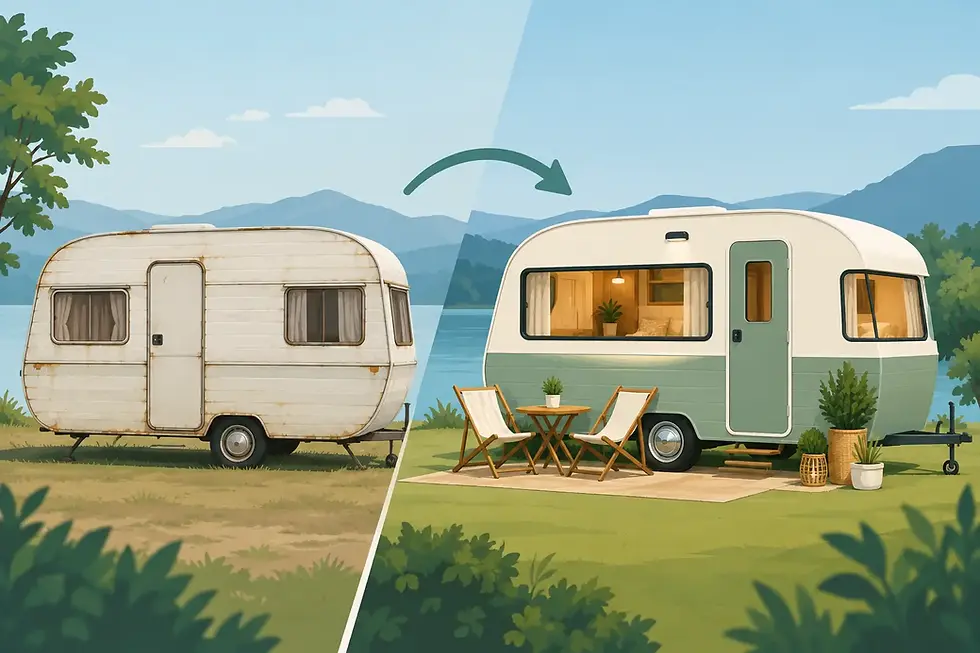
At Palace Caravans, this often means treating the claim repair and the renovation as related but separate parts of the same project. The approved damage can be restored through the insurance process, while owner-funded changes are planned around it - whether that is new flooring, a brighter colour scheme, updated cabinetry or a full vintage makeover.
Questions to ask before you decide
Before lodging a claim or approving private work, get clear answers to a few practical questions. Is the damage sudden or gradual? What is your excess? Will the repair affect your premium or no-claim history? Is there a possibility of hidden structural or water damage? And, most importantly, what result do you want when the caravan leaves the workshop?
If the claim covers a damaged side wall, for example, you may only need a sound reinstatement. But if the caravan has been waiting for a refresh, it may make sense to coordinate a private repaint, exterior reseal or interior refit while it is already being worked on. The best choice is the one that protects the caravan’s safety and value without spending money on work you do not need.
A careful inspection and a transparent scope can remove much of the uncertainty. Start with the damage, check your policy, then talk through the repair options before making a decision. Whether insurance funds the essential restoration or you choose a private transformation, your caravan deserves workmanship that keeps it ready for the road - and ready to feel like home.


Comments