


Caravan Accident Damage Repair After a Crash
A scrape down the side of the van, a cracked corner panel or a heavier impact can change a planned getaway in seconds. Good caravan accident damage repair is not just about making the exterior look presentable again. It is about finding out what moved, cracked, leaked or stopped working behind the visible damage, then rebuilding your little Palace properly.
For many owners, the caravan is part holiday home, part family memory and part practical investment. That is why a rushed patch-up can be disappointing and, in some cases, unsafe. A careful repair process protects the structure, weatherproofing and resale value of the van, while giving you confidence to tow and travel again.
Start With Safety, Photos and a Clear Record
After an accident, make sure everyone is safe and follow the usual steps at the scene. Once it is safe to do so, take clear photographs of the caravan from several angles. Capture the point of impact, wider shots showing the position of the van, damaged accessories, tyres, windows and anything inside that has shifted.
Keep details of the other vehicle or party involved, the date and location, and any incident or police reference number where applicable. If you have roadside assistance or caravan insurance, contact them early and ask what they require before authorising major work.
It can be tempting to wash off scuffs, straighten a bent trim piece or tape over a split panel before the assessor sees it. Temporary protection from rain is sensible, but photographs should come first. A clean record helps the insurer and repairer understand the full event, particularly where damage to an awning, bumper bar, bike rack, air-conditioner or solar equipment is part of the claim.
What Caravan Accident Damage Repair Can Involve
Caravan construction is different from a standard passenger vehicle. A knock to an external aluminium panel can travel through the frame, insulation, internal lining and cabinetry. Damage around a corner, door, wheel arch or roofline may also compromise seals and allow water in long after the accident.
The visible mark is only the starting point. A proper workshop inspection may assess the chassis and A-frame, suspension and axle alignment, body frame, floor, roof, windows, hatches, doors, external cladding, plumbing, gas fittings and electrical systems. The right scope depends on the impact. A low-speed reversing mishap may need local panel and trim work; a side impact or rollover can call for much broader structural repairs.
Common accident repair work includes replacement or repair of damaged wall and roof sections, new corner moulds and trims, resealing, window replacement, door adjustment, chassis and suspension assessment, and exterior painting or respraying. Inside, the work may extend to repairing cabinetry, flooring, wall linings, appliances or electrical components affected by movement or water entry.
The key is not to assume that a dent is merely cosmetic. If a seal has separated, a panel has distorted or an internal frame has shifted, the repair needs to address the cause as well as the finish.
Water entry is the damage that should not wait
A cracked roof edge, split moulding or displaced window can expose timber and insulation to moisture. On an older caravan, that moisture can spread quietly behind walls and beneath the floor. By the time staining, soft spots or a musty smell appear, the repair may be more involved than it first seemed.
If the van has been damaged and rain is expected, arrange suitable temporary weather protection and have the sealing checked promptly. The aim is to limit secondary damage while the insurance and repair process is underway.
Working Through an Insurance Repair
Insurance repairs are usually easier when the repairer, owner and insurer have a clear line of communication. Your insurer may nominate an assessor, request a written quote or ask for photographs and a detailed damage report. A specialist caravan workshop can help identify accident-related damage and prepare an estimate that reflects the work actually required.
There can be choices around repair versus replacement. Reusing an existing component may make sense if it remains sound and the finish can be restored properly. In other cases, replacement is the better long-term option, especially where a panel, hatch, window or structural element has been distorted. Availability of parts can also affect timing, particularly for imported caravans, discontinued fittings and vintage models.
Be open with your repairer about your policy excess, any insurer instructions and what matters most to you. Some owners are focused on returning to the road before a booked trip. Others would prefer to take the opportunity to refresh a tired exterior, improve storage or update damaged fittings while the caravan is already in the workshop. These are sensible conversations to have early, before work is underway.
Why Specialist Caravan Workmanship Matters
Caravans flex on the road, sit in heat and rain, and carry their own electrical, plumbing and interior systems. Repairs need to account for all of that. A panel can look straight on collection day but fail later if the sealing, fasteners or surrounding frame were not dealt with correctly.
This is especially true for older, retro and classic caravans. Their construction methods, materials and proportions often need a more considered approach than a modern production van. Matching exterior lines, preserving original character and rebuilding practical internals requires both technical repair knowledge and an eye for the finished result.
At Palace Caravans, the workshop approach is to inspect the damage carefully, talk through the practical options and keep the owner informed as work progresses. That matters when a caravan has sentimental value, but it also matters for straightforward insurance work. Clear communication helps prevent surprises around scope, parts and timing.
Repair first, renovation where it makes sense
An accident does not always have to mean returning the caravan to exactly what it was before. If cabinetry, flooring or wall linings need to come out for access, it may be the right time to consider a renovation that better suits the way you use the van.
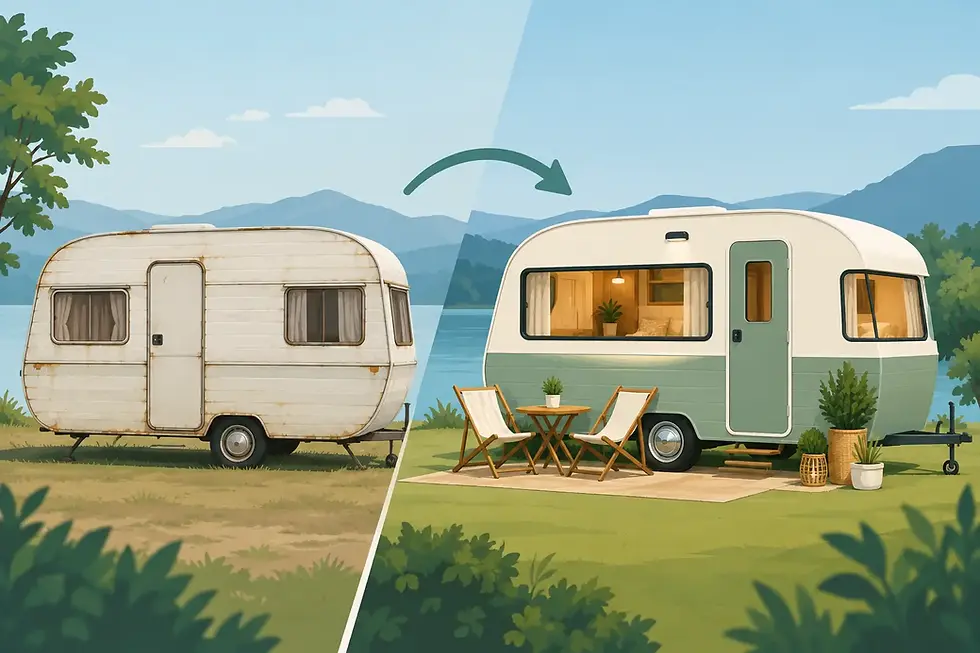
That could mean brighter interior colours, hard-wearing new flooring, improved lighting, updated appliances, extra charging points or a more useful layout for an onsite van. A damaged exterior can also be an opportunity for a fresh respray or a colour scheme that gives a vintage caravan its personality back.
There is a balance to strike. Insurance generally relates to restoring accident damage, while elective upgrades may sit outside the claim. Separating those costs clearly lets you decide where a custom improvement is worthwhile without losing sight of the repair budget.
Questions Worth Asking Before Work Begins
A good estimate should make the proposed work understandable. Ask whether the quote includes structural inspection, water-damage investigation, resealing, paintwork and refitting of accessories. If parts need to be ordered, ask about expected lead times and whether temporary protection is needed in the meantime.
It is also reasonable to ask how the workshop will handle hidden damage found after strip-down. In caravan repairs, concealed issues can only become visible once panels, trims or internal linings are removed. The important thing is that additional work is documented, explained and approved before it goes ahead.
For electrical work, ask what will be tested after repairs. A quality process should consider 240V and 12V systems, batteries, solar connections, lighting and appliances where they have been affected. If the impact involved the undercarriage, towing gear or suspension, make sure these items are assessed rather than relying on the caravan appearing normal from the outside.
Checking Your Caravan at Collection
When you collect the van, allow time to walk around it with the repairer. Look at the repaired area in good light, but also open doors, windows, hatches and cupboards nearby. Check that seals sit neatly, locks operate, lights work and accessories have been refitted securely.
Ask what work was completed and whether there are any follow-up care requirements for paint, sealants or new fittings. Keep the repair documents, invoices and photographs with your caravan records. They can be useful for insurance, future servicing and resale.
A repaired caravan should feel ready for its next chapter, not like a compromise you have to keep an eye on. Taking the time to diagnose damage properly, make informed decisions and choose careful workmanship gives your little Palace the best chance of many more safe weekends away.


Comments