


Retro Caravan Renovation Ideas That Last
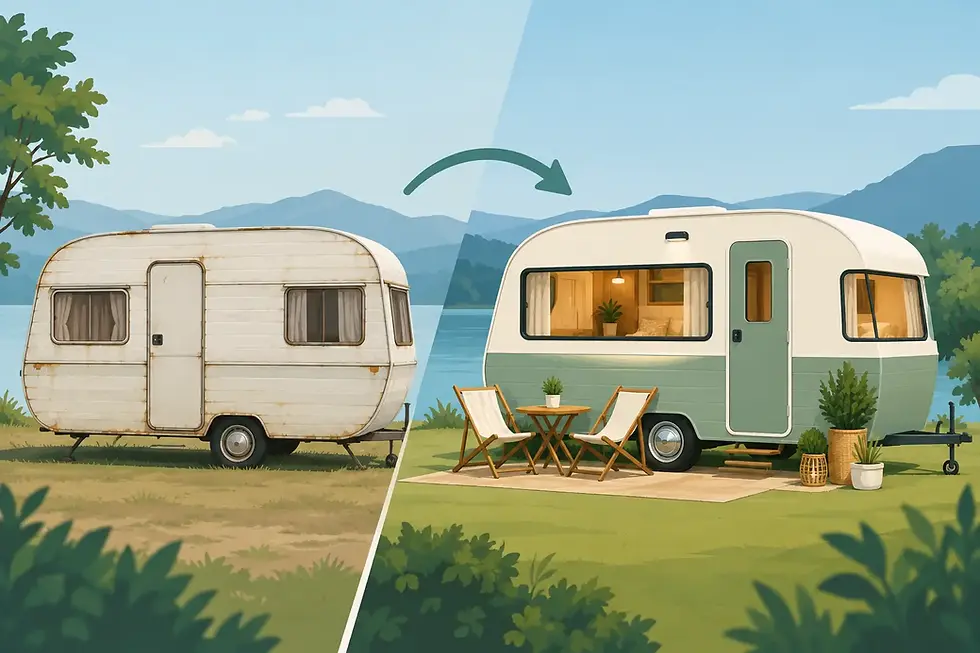
A faded stripe, a chipped laminate benchtop and a pair of old windows can still make a retro caravan feel full of possibility. The best retro caravan renovation ideas do not erase that character. They deal with the hidden repair work first, then bring the van back to life with colours, finishes and practical upgrades that suit the way you will actually use your little Palace.
For some owners, that means restoring a cherished 1970s tourer for weekend escapes. For others, it means turning a tired onsite van into bright, comfortable accommodation, or creating a polished mobile bar for events. The starting point is the same: make sure the caravan is sound before choosing the fun parts.
Start with the caravan underneath the style
A retro caravan can look wonderful from the kerb while carrying water damage behind the walls, a soft floor near the door, perished seals or ageing wiring. Fresh paint and new cushions will not fix those problems. Worse, they can cover them up until the repair becomes larger and more expensive.
Before planning colours or cabinetry, inspect the roof, corner moulds, windows, entry door, awning rail, chassis, floor and lower wall sections. Look for staining, bubbling wall lining, musty smells, movement underfoot and sealant that has cracked or pulled away. Water can travel a surprising distance from the point where it enters, so the visible mark is not always the full story.
This is where a proper workshop assessment is worth the time. Structural repairs, resealing and replacement of damaged framing should be completed before interior finishes go in. If the caravan has been involved in an accident or hail event, insurance repairs may also need to be considered before a renovation plan is locked in.
Keep one or two genuine retro features
The temptation with a full renovation is to replace everything. Sometimes that is necessary, particularly where materials are damaged or unsafe. But a caravan can lose its personality when every original feature disappears.
Choose one or two elements that are worth celebrating. It might be the distinctive external profile, the original louvre windows, a curved overhead cupboard, timber trim, vintage-style handles or the classic aluminium cladding. These details give the finished van a story and help it feel different from a new build.
The key is to be selective. An original cupboard can be retained and refinished if its structure is sound. A worn-out bench that swells when wet is not a feature worth saving. Good restoration is not about preserving every old part. It is about keeping the parts with character while replacing the parts that limit safety, comfort or durability.
Retro caravan renovation ideas for a brighter interior
Older caravans often feel dark because of heavy timber tones, small windows and bulky furniture. A lighter scheme can make a dramatic difference without making the van look bland.
Start with the largest surfaces. Warm white, soft cream, pale sage, dusty blue and muted clay tones work well with retro shapes and make compact interiors feel more open. Painting walls and cabinetry can be transformative, but preparation matters. Surfaces need to be cleaned, repaired, primed and coated with products suited to the material and the movement that occurs in a caravan.
For a more playful finish, use colour in deliberate places rather than everywhere. A checkerboard-look floor, coloured splashback, patterned upholstery or painted cupboard doors can bring in personality. Pair a bolder feature with calmer walls and benchtops so the space still feels restful.
Choose flooring for real caravan life
Flooring needs to handle sand, wet feet, dogs, holiday traffic and the flex of a moving vehicle. Vinyl plank and quality sheet vinyl are popular choices because they are easy to clean, relatively light and available in timber-look, terrazzo and retro patterns. They are generally more practical than carpet in a caravan, particularly near the entry and kitchen.
The subfloor must be dry, level and structurally sound before new flooring is fitted. Installing a beautiful finish over soft or water-damaged flooring only delays the inevitable repair.
Make the seating work harder
A dinette can be reupholstered in a hard-wearing fabric or marine-grade vinyl that suits the era of the van while coping with everyday use. Consider whether the seating needs to convert into a bed, include storage underneath or accommodate a larger family.
Custom cushions can improve comfort far more than many owners expect. Foam density, seat depth and back support matter, especially for an onsite caravan where the seating may be used every day. If the layout feels cramped, replacing an oversized lounge with a slimmer, well-designed dinette can create valuable floor space.
Update the kitchen without losing the charm
A retro caravan kitchen does not need to look like a standard house kitchen. Simple cabinetry, rounded corners, timber accents and coloured laminate-inspired finishes can retain a period feel while delivering better storage and easier cleaning.
Think carefully about how you cook. A weekend van may only need a compact fridge, practical sink and bench space for breakfast. An onsite van or event caravan may need more durable cabinetry, a larger refrigerator, extra power points and better ventilation. There is no single best layout - the right answer depends on how often the caravan is used and where it will live.
Modern appliances can be fitted behind a retro-inspired look, but installation requirements should guide the design. Gas, ventilation, clearances, 240V connections and weight distribution are not areas for guesswork. A professional fit-out helps ensure the kitchen is not only attractive but safe and compliant.
Treat lighting as part of the renovation
Lighting is one of the simplest ways to change the mood of a caravan. Harsh, outdated fittings can make even a freshly painted interior feel tired. Warm LED lighting uses less power and can be placed where it makes the biggest difference: over the kitchen bench, beside the bed, inside cupboards and around the dining area.
Keep the fittings in scale with the caravan. Small wall sconces, low-profile ceiling lights and reading lamps often work better than large domestic-style pendants. If you love a vintage look, choose fittings with a retro shape but modern electrical components.
For off-grid or low-power use, plan lighting alongside the 12V system, battery capacity and solar setup. A lighting plan that looks good on paper may not suit the available power system without the right electrical upgrades.
Refresh the exterior with purpose
Exterior painting is often the moment a forgotten caravan becomes a head-turner. A crisp white body with a coloured stripe is a classic choice, while pastel tones, two-tone panels or a carefully restored aluminium finish can suit different eras.
But exterior work should never be paint-first. Resealing, panel repairs, dent repairs and preparation determine how long the result will last. If windows are removed for repairs or replacement, it is an ideal time to address seals and surrounds properly rather than simply painting around them.
Consider the setting as well. An onsite caravan near the coast needs finishes that stand up to salt air and strong sun. A mobile business caravan needs a colour scheme that photographs well, supports branding and still looks tidy after being towed and cleaned regularly.
Build storage into every unused corner
Storage is where many renovations either succeed or disappoint. A caravan may look spacious on handover, then feel crowded as soon as bedding, food, camping gear and children’s bags arrive.
Use vertical cupboards, under-seat storage, shallow shelves and purpose-built drawers where possible. Keep heavy items low and close to the axle area to support sensible weight distribution. Overhead cupboards are useful for lighter items, but overloading them can affect both safety and the longevity of fixings.
For an onsite retreat, storage can be more generous because towing weight is less of a concern. For a touring caravan, every material and feature should be considered in the context of weight, balance and what genuinely earns its place.
Plan the budget around priorities, not trends
A thoughtful renovation budget separates essential repairs from cosmetic wishes. Water ingress, structural work, brakes, tyres, gas and electrical systems belong at the top of the list. Once the caravan is safe and weather-tight, you can decide where to spend on finishes, appliances and custom details.
It can be sensible to stage the work. Complete repairs, resealing and exterior preparation first, then move to flooring, cabinetry and upholstery when the budget allows. On the other hand, if walls or cabinetry need to come out for water damage repairs, doing connected work at the same time can avoid paying twice for labour and dismantling.
At Palace Caravans, the most rewarding projects usually begin with an honest conversation about how the owner wants to use the van, what must be repaired and which details will make it feel personal. A clear plan protects the budget and leaves room for the creative choices that make people smile when they open the door.
Your retro caravan does not need to be perfect or museum-original to be special. Give it a dry, safe, well-finished foundation, retain the details worth remembering, and shape the rest around the trips, gatherings or quiet weekends you want it to hold.


Comments