


Caravan Repairs That Bring Your Van Back
A soft patch near the door, a water stain creeping across the ceiling or a dented corner after a tight reversing manoeuvre can quickly take the shine off caravan ownership. Good caravan repairs are not only about making damage disappear. They protect the structure, keep your family comfortable on the road and preserve the character that made you choose that van in the first place.
For some owners, the job is straightforward insurance work after an accident or hailstorm. For others, it is the first step in bringing a tired retro van back to life. The right approach depends on what sits beneath the visible damage, how you use the caravan and what you want your little Palace to become.
Start with the cause, not just the visible damage
A caravan is a moving home. Its walls, roof, windows, seals, chassis, wiring, plumbing and cabinetry all work together, often under tough Australian conditions. A crack in a panel, a bubbling section of vinyl or a musty smell may look minor, but it can point to a larger issue behind the surface.
Water ingress is the clearest example. Rain can enter through failed roof seals, ageing window surrounds, awning mounts, lights, hatches or damaged cladding. Once moisture gets into timber framing, insulation or flooring, it can travel well beyond the original entry point. Replacing only the stained lining without tracing the leak can leave the problem quietly growing behind a freshly painted wall.
The same thinking applies after impact damage. A damaged rear corner, side wall or A-frame area may affect more than the outer skin. A proper assessment checks framing, joints, door alignment, seals, wheel-arch areas and any systems that may have been disturbed. This is particularly relevant for insurance repairs, where the visible dent is only part of the repair scope.
A thorough workshop inspection should establish what happened, what has been affected and what needs attention now versus later. That makes it easier to plan work around safety, budget and the way you intend to use the van.
When caravan repairs need urgent attention
Some issues can wait until the next convenient workshop booking. Others deserve prompt attention because delays can turn a contained repair into a much larger restoration.
Water marks, soft flooring, swelling cabinetry, mouldy odours and loose interior wall lining should be investigated quickly. So should cracks around windows and roof penetrations, especially before a period of wet weather. If your caravan has sustained accident damage, check that doors and hatches close correctly and that exposed edges are protected from rain until repairs begin.
Electrical faults are never a cosmetic job. Flickering lights, tripping power, burnt smells, damaged external power inlets or unreliable 12V charging systems need professional diagnosis. Caravan electrical work can involve both 240V and 12V systems, batteries, solar charging, appliances and lighting. It is work that needs to be completed safely and correctly, not patched together for the next weekend away.
Tyres, brakes, bearings, gas equipment and suspension are equally important, although they may fall outside an interior renovation scope. If you are unsure whether damage affects towing safety, treat it as a priority and seek the appropriate specialist advice before travelling.
Repair, restoration or renovation: choosing the right scope
Not every old caravan needs a full rebuild, and not every damaged caravan should simply be returned to its original condition. The best scope starts with an honest conversation about the van's condition and your plans for it.
A repair is usually the practical choice when the caravan is otherwise sound and you want it back on the road or back at its onsite location. This may include replacing damaged cladding, repairing water-affected sections, resealing the roof, restoring panels after hail damage, repairing cabinetry or completing an exterior respray.
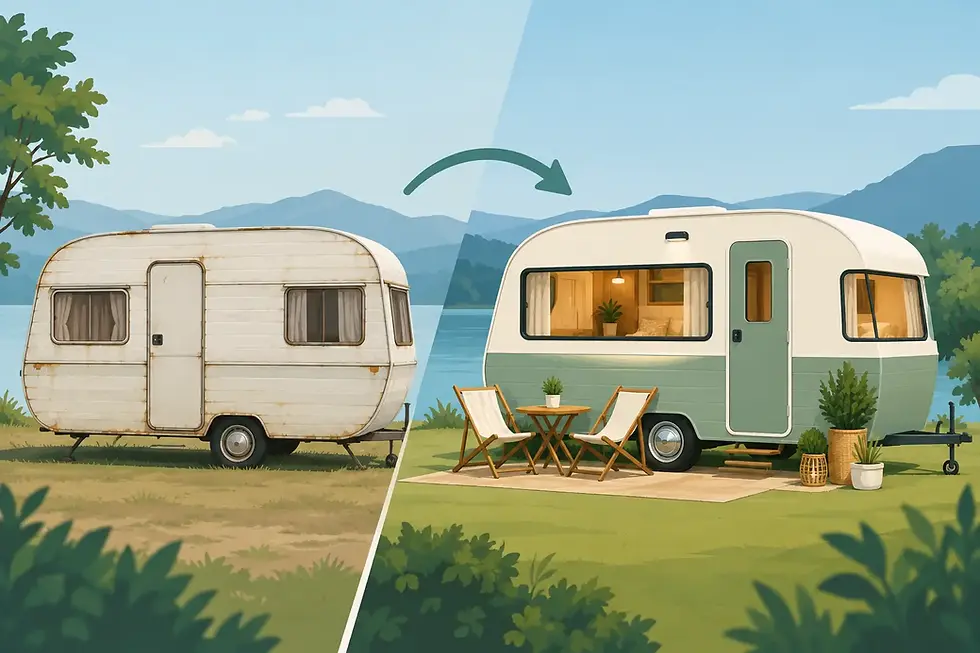
A restoration makes sense when preserving the personality of a vintage, retro or classic caravan matters. Original proportions, curved cabinetry, period details and distinctive external lines can be retained while tired materials, damaged framing and outdated services are renewed. The result can still feel like the caravan you fell in love with, only safer, brighter and more usable.
A renovation is often the right path for an older onsite van or cabin that feels dark, cramped or stuck in another era. New flooring, cabinetry, bench tops, paint, lighting, appliances and window furnishings can completely change how the space works. Sometimes a revised layout is enough to create better storage and a more comfortable place for weekends, guests or holiday letting.
There are trade-offs. A full renovation offers the biggest visual transformation, but it requires a larger budget and more decisions around finishes, appliances and layout. A targeted repair can be more economical, but it may leave untouched areas looking their age. The practical answer is not always the biggest job. It is the work that gives you the safest, most worthwhile outcome for your caravan.
The details that make a repaired caravan feel right
The strongest caravan repairs combine invisible structural work with considered finishing. Once framing, sealing and services are sound, the design decisions bring the space together.
Interior and exterior painting can lift a faded caravan dramatically, but preparation is what makes the finish last. Surfaces need to be repaired, cleaned and prepared for the materials involved. A quality paint choice also needs to suit how the van is used, whether it spends most of its life under cover, on a coastal site or travelling through heat and dust.
Flooring is another decision where appearance and practicality meet. It needs to cope with sand, wet feet, pets and movement while still fitting the style of the van. Cabinetry should make the most of limited space, with storage that works around bedding, cooking gear, clothes and everyday living. In a compact caravan, even a small change to a bench, cupboard or dinette can make the room feel easier to use.
Lighting deserves more thought than it often gets. Warm, well-positioned lighting can make a small interior feel inviting, while task lighting improves cooking, reading and packing. Upgrading to efficient 12V lighting, adding solar capacity or improving battery charging can also make off-grid stays more comfortable. The right system depends on whether your caravan is mainly plugged in at a park, used on a permanent site or taken away from mains power regularly.
Why communication matters during caravan repairs
Caravan work can uncover surprises, particularly in older vans. Hidden rot, old repairs, non-standard parts and previous DIY changes may only become clear once linings or panels are removed. That does not have to make the project stressful, provided there is clear communication about what has been found and what the options are.
A good repair process includes an upfront discussion about your priorities, a clear estimate, practical advice on where to spend and where to save, and updates as the job progresses. Photos can be especially helpful when structural repairs are happening behind the scenes. They show the work that will later be hidden by new lining, cabinetry or cladding.
This is also where a specialist workshop adds value. Palace Caravans approaches each project as both a repair job and a personal space, whether it is an insurance claim, a cherished 1970s van or a caravan being converted into a mobile bar. The aim is not to force every owner into the same package, but to build a result around their budget, practical needs and design vision.
Planning a caravan project with confidence
Before booking work, take clear photos of the affected areas inside and out. Note when you first noticed the problem, whether it changes after rain and any issues with power, appliances, windows or doors. If the damage followed an accident or weather event, keep relevant insurance details and photographs from the time.
It also helps to think beyond the immediate repair. If a wall needs to come apart due to water damage, is this the right time to update the lights or replace tired flooring? If exterior panels are being repaired, would a respray give the whole caravan a more cohesive finish? Combining compatible jobs can sometimes reduce repeat labour later, though it is worth weighing that against your available budget.
Bring inspiration if you have it, but be open to practical alternatives. A favourite colour, a photo of a retro interior or a vision for a bright coastal retreat gives the design process a starting point. An experienced caravan workshop can then advise what will suit the van's dimensions, existing structure and intended use.
Your caravan does not need to be perfect to be worth saving. It needs a clear plan, careful workmanship and repairs that respect both the road ahead and the memories already made inside it. Whether the goal is a safe family tourer, a polished onsite escape or a one-of-a-kind business asset, the best next step is to have the damage assessed properly and make decisions with the full picture in view.


Comments