


10 Onsite Caravan Makeover Ideas That Last
A permanent van should feel less like a tired stopover and more like your little Palace. The best onsite caravan makeover ideas do more than freshen up old cushions or add a coat of paint. They solve the things that make a van frustrating to use: dark interiors, damaged walls, poor storage, unreliable power, heat, leaks and layouts that no longer suit the family.
An onsite caravan has different demands from a touring van. It may spend years in the same coastal park or holiday destination, exposed to salt air, sun, rain and plenty of foot traffic. That makes durable repairs and sensible material choices just as important as the finished look.
Start with the structure, not the styling
It is tempting to choose a colour palette first. In an older caravan, though, a beautiful interior will not stay beautiful if there is water getting in behind the walls or a soft patch in the floor. Before planning finishes, inspect the roof, windows, corner moulds, hatch seals, cladding, chassis, subfloor and areas around the bathroom and kitchen.
Musty smells, bubbling wall linings, stained ceiling panels and spongy flooring can all point to water damage. A professional assessment can separate a small resealing job from a larger rebuild, which is particularly valuable before money is spent on cabinetry, flooring and appliances. If insurance repairs are involved after hail, storm or accidental damage, this is also the right point to understand what needs to be returned to a safe, sound condition.
For an onsite van near the beach, exterior resealing and protective paintwork are not cosmetic extras. They help defend the shell against the weather that caused the deterioration in the first place.
Brighten a dark caravan without making it bland
Older vans often have deep timber-look cupboards, patterned wall vinyl and small windows that absorb every bit of available light. Lighter colours can change the feeling of the whole space, but the best result is usually layered rather than all-white.
Warm white or soft cream walls work beautifully with pale timber tones, muted sage, dusty blue or a sun-washed terracotta accent. A painted feature panel behind the lounge or bed adds personality without closing in the room. Keeping the ceiling light is especially effective in lower vans, where dark overhead surfaces can make the interior feel cramped.
Interior and exterior painting needs the right preparation. Caravan surfaces move, flex and can include aluminium, fibreglass, laminate and old vinyl. A finish that looks good for one summer but chips after a season is false economy. Correct preparation, suitable coatings and careful masking around trims make the difference between a quick refresh and a proper transformation.
Keep vintage character where it earns its place
A retro caravan does not have to become a generic tiny house. Original curved cupboards, louvre windows, aluminium trims or a classic external stripe can be retained as features while the rest of the van is modernised. Sometimes restoring one original element properly gives the finished space far more character than replacing everything.
The trade-off is practicality. If original cabinetry is swollen, poorly laid out or too damaged to repair, custom-built replacements can provide better storage and a cleaner finish while still respecting the van's era.
Rethink the layout around how you actually use it
A touring layout is not always ideal for a van that stays put. An unused dinette might be better as a generous lounge, a work nook, a bunk zone for grandchildren or extra pantry storage. Start by looking at what happens in the van on a normal weekend. Where do wet towels land? Where do bags pile up? Is there enough bench room to make breakfast? Can everyone sit down comfortably when it rains?
A smart onsite caravan makeover often focuses on the living zone first. Reupholstering a dinette, replacing tired foam, adding a compact table and installing practical overhead storage can make a small room far more inviting. If the van is mainly for couples, a fixed bed with drawers below may offer more value than a second dining setting. For a family van, durable seating and a flexible table can be the better call.
Avoid filling every empty wall with cupboards. Closed storage is useful, but too much bulk at eye level makes a narrow caravan feel smaller. A balanced mix of overhead cabinets, open shelves for a few well-chosen items and hidden storage under seats keeps the space useful without creating visual clutter.
Choose flooring and fabrics that can handle holiday life
Onsite vans see sandy feet, wet swimmers, dogs, kids and the occasional muddy dash in from the annexe. Flooring needs to be hard-wearing, easy to clean and suitable for a caravan floor that may not be perfectly level. Quality vinyl plank or sheet vinyl can give the look of timber while coping better with moisture and day-to-day wear than many softer alternatives.
Before new flooring goes down, make sure the subfloor is dry and solid. Covering soft timber or moisture damage may hide the problem for a while, but it will not fix it.
For upholstery, choose fabrics that suit the way the van is used. Textured neutrals hide the odd mark better than bright plain fabrics, while removable covers can make sense for a busy family retreat. In a sunny park, consider UV resistance for curtains and cushions. Block-out blinds or lined curtains can help with early morning light and summer heat, but they should not prevent windows from being opened for ventilation.
Upgrade the kitchen for real meals, not just appearances
A good caravan kitchen does not need to be huge. It needs to be organised. Replacing a damaged benchtop, improving drawer runners, adding a deeper sink or fitting a better splashback can make a modest galley feel completely different.
Think carefully about appliances before changing cabinetry. A new fridge, cooktop, microwave or rangehood may have specific ventilation, clearance and electrical requirements. It is much easier and safer to plan these as one project than to build a stylish kitchen and discover the appliance will not fit correctly.
If your onsite van is used for long stays, pantry space often matters more than an oversized oven. Tall pull-out storage, deep drawers and a dedicated spot for a kettle, toaster and food containers reduce bench clutter. Small improvements like soft-close hardware and good task lighting make the kitchen feel more considered every day.
Make power, lighting and cooling part of the makeover
Lighting is one of the fastest ways to lift an ageing caravan. Replace harsh, uneven fittings with efficient LED downlights or surface lights, then add focused lighting over the kitchen, reading lights beside the bed and softer illumination around the lounge. Warm white lighting usually feels more homely than a cool blue-white tone.
Electrical work should never be treated as an afterthought. An onsite van may need additional 240V outlets, safer switchboard arrangements, upgraded 12V systems, battery charging or solar to suit its intended use. The right answer depends on whether the van is connected to park power full-time, used off-grid at times, or fitted with energy-hungry appliances such as air-conditioning.
Air-conditioning can be a worthwhile addition on the Central Coast, particularly in a van with limited shade. However, cooling performance is tied to insulation, window coverings, roof condition and the electrical capacity available. A properly planned system is more effective than simply choosing the largest unit that can be fitted.
Extend the living area with an annexe-ready exterior
For many onsite caravan owners, the annexe is where the day is spent. Refreshing the external awning, repairing attachment points and ensuring doors and windows operate properly can improve the connection between the van and outdoor area.
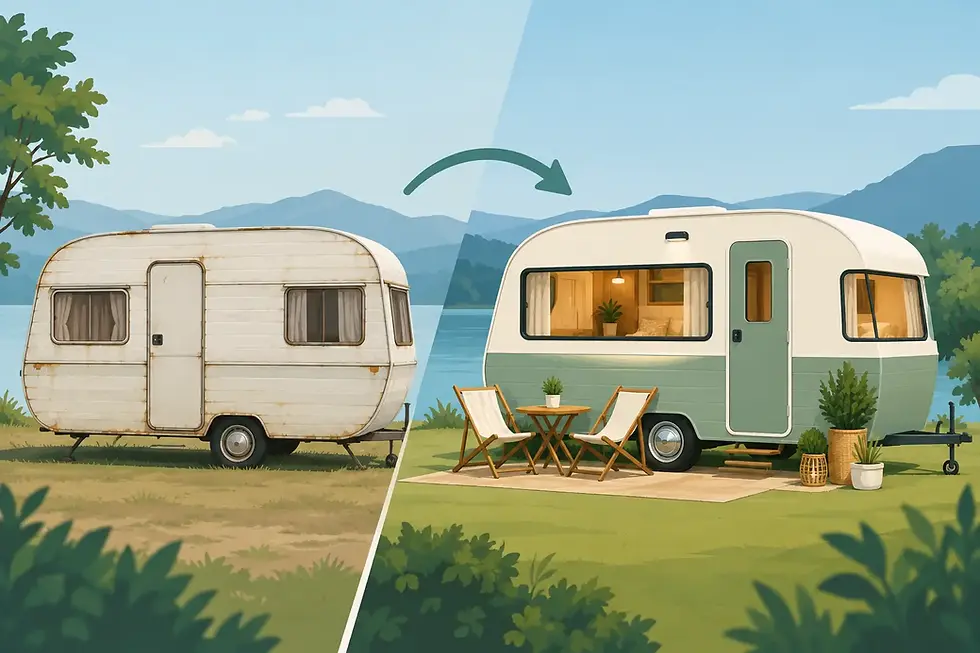
Consider how the exterior colour will sit beside the annexe, decking and surrounding site. A clean respray in a classic cream, soft grey, pastel or two-tone vintage scheme can turn an overlooked van into a genuine feature of the park. Exterior choices need to suit the condition of the caravan and any park requirements, so it pays to check those details before finalising a bold design.
Add details that make it feel personal
The finishing touches should earn their place. New handles, tapware, window furnishings, a feature light, painted cupboard fronts and coordinated bedding can bring the scheme together without crowding the van. A few framed coastal prints or a favourite vintage sign may be enough. The aim is a space that feels cared for, not staged.
For a commercial conversion, such as a mobile bar or event caravan, the same principle applies with added practical demands. Durable service surfaces, refrigeration, electrical capacity, branding and safe workflow all need to work together behind the polished exterior.
A caravan makeover is most rewarding when it is planned around the way you want to live in the space, not just the photos you have saved. Start with the repairs that protect the van, invest in the upgrades you will use every visit, and let the colours and details turn it into a place you are genuinely pleased to arrive at.


Comments